

Mark and I have been married eleven years, and for most of them I would have said we were fine at talking. Then the kids got old enough that bedtime slid to 8:30, and by the time we sat down at the kitchen table we had ninety minutes and nothing to say that was not a schedule. Who is driving to practice. Did you pay the water bill. That is not a marriage problem exactly. It is a material problem. You run out of things to say because the day ate them, and nobody hands you new ones.
Let's Get Deep, the question card game for couples from WHAT DO YOU MEME? (Relatable), is the fix I did not expect to work. I bought it with low expectations on a Sunday, and Mark, who is 41, an HVAC technician, and deeply suspicious of anything labeled a relationship game, agreed to one round on a Tuesday. Forty minutes later he was the one dealing. The tin has lived on the shelf next to the cookbooks ever since. That is the short version. Here is the long one, in ten reasons.
Ten minutes at the kitchen table is enough to start
Four piles, two players, no scoring. That is the whole setup.
Amazon Check Today's Price on Amazon →It hands you a question when your brain hands you nothing
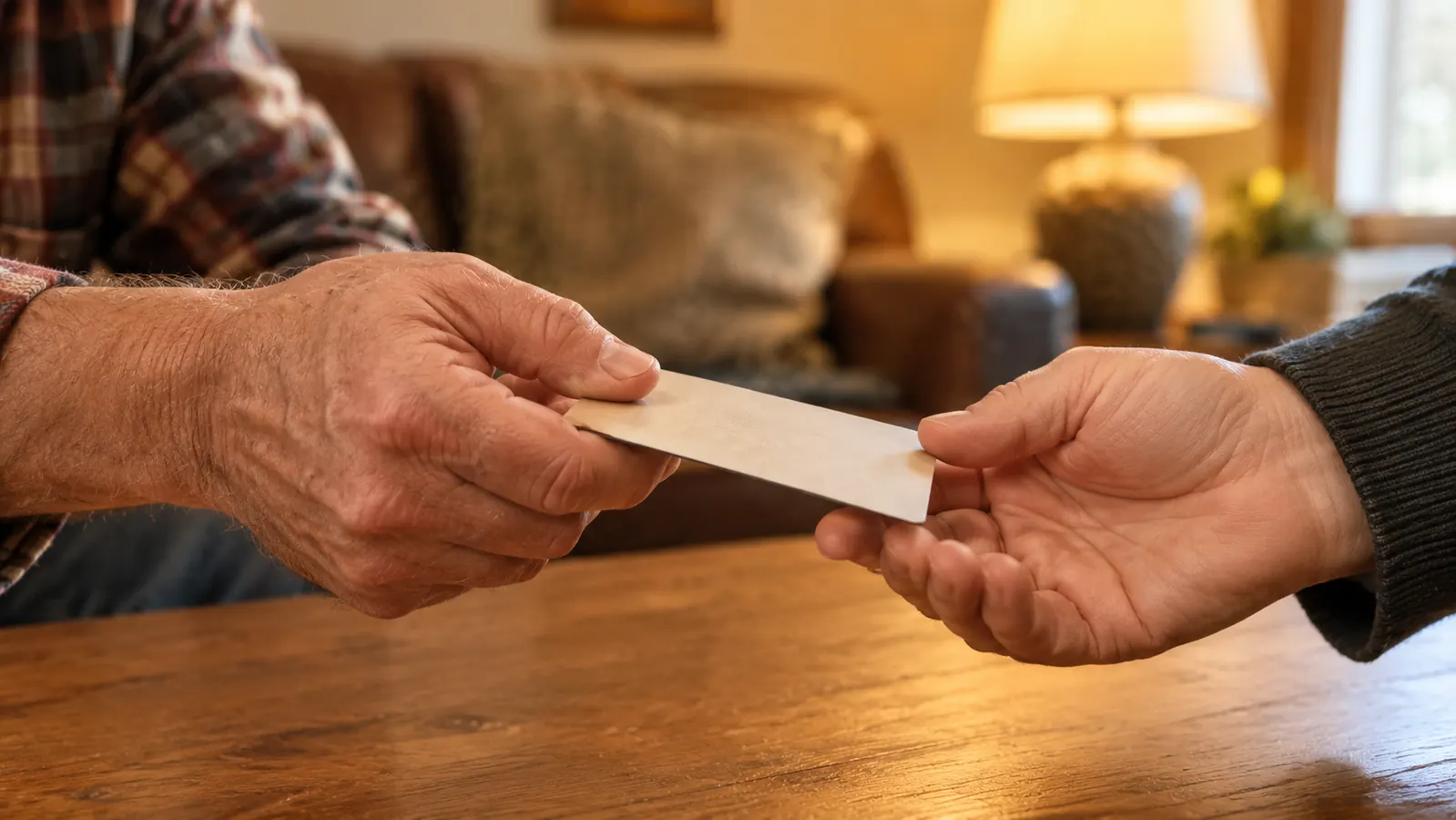
A card removes the blank space. You do not have to invent a good question at 8:45 on a Wednesday, because you flip one and read it out loud. That sounds like a small thing until you notice how often the silence at your table is not resentment, it is fatigue. Generating a real question takes energy, and by nine o'clock neither of us has any. The card spends the energy for you. The first time we played, the top card asked about the first thing I ever noticed about him, and I gave an answer he had never heard in eleven years.
The four piles let you pick a depth instead of guessing
WHAT DO YOU MEME? (Relatable) splits the cards into four piles: Ice Breaker, Deep, Deeper, and Activity. That structure is the reason this works on a weeknight. If we are tired, we stay in Ice Breaker and laugh for twenty minutes. If we actually have a Saturday, we go to Deeper. You are not committing to a two-hour emotional summit every time you open the tin. You are choosing a depth and then stopping when you want to stop.
It works on the partner who thinks the whole idea is dumb
Mark's opening line was that he was not doing homework. He is a quiet man who fixes furnaces for a living and would rather be asked about refrigerant lines than about his feelings. What got him was the format. A card is a question with edges, so he could answer the question without answering the implication behind it. Twenty minutes in, he read one out loud, laughed at his own answer, and dealt the next round himself. I have been married to this man for eleven years and I have never once seen him volunteer for a conversation exercise.
A round is twenty minutes, not a whole evening
There is no scoring, no timer, and no winner, and the box says two or more players. That means a round is however long you want it to be. Ours run twenty to thirty minutes, which fits exactly into the gap between bedtime and the point where one of us falls asleep on the couch. It is manual in the plainest sense: you shuffle, you draw, you talk. No setup, no pieces to lose, no rules argument to have at ten at night.
The 17 and up rating means nobody has to be polite
The box is rated for ages 17 and up, and the content earns it. Some cards are blunt, and a few will make you put the deck down for a second. That is the point. Politeness is what we default to when we are tired, and the deck gives you permission to skip it. Two of our better conversations this year started as a joke answer and ended somewhere neither of us planned. I would not play this with my mother. I would play it with my husband on a Tuesday.

The tin is small enough to stay visible, so it actually gets used
The container measures 8.27 by 4.33 inches, roughly the size of a hardback novel. It fits on a shelf, in a drawer, or in the bag you take to a rental for the weekend. The size matters more than it should. Games we have to dig out of a closet do not get played. This one sits next to the cookbooks at eye level, and because it is visible, it gets picked up. Availability is underrated as a relationship strategy.
The Activity pile pulls you out of the chairs
The Activity pile is the one nobody expects. Those cards ask you to do something rather than answer something, and they get you moving. In warm months we take the tin out to the small back porch, and the activity cards are what keep us out there past dark. If you are the kind of couple that talks better while doing something with your hands, start with that pile and work backwards through the rest.
Paper cards are a screen-free rule you do not have to enforce
Both phones go face down because there is nothing to look up, nothing to photograph, and no notifications pulling at you. It is cards in a tin, made of paper, in English, with a trivia theme running underneath the questions. That is the entire technology. After a day of screens, the low-tech version is the reason we stay in the room instead of drifting to separate couches.
It travels, and it gifts, without a rulebook lecture
Two players is the minimum, so it works for a couple in the same house, a couple in different cities on a video call, or two people who have been married long enough to assume they know everything. WHAT DO YOU MEME? (Relatable) sells it as a gift for new relationships, wedding showers, and anniversaries, and that is fair. It is also the rare gift that does not ask the recipient to clear a shelf or sit through an explanation of the rules.
You end up with inside jokes you will still be using in a year
The pile accumulates. A deck you use regularly builds shorthand, and shorthand is what makes a house feel like a house. Ours now includes three lines that mean nothing to anyone else and get used weekly, usually to end a standoff about whose turn it is to run the dishwasher. That is the part no product description mentions. You are not buying a game so much as a set of private references, and those compound the longer the tin stays on the shelf.
What I'd Skip
Skip the Deeper pile on a night when you are already annoyed with each other. That is not the deck's fault, but it is a mistake I have made. A hard question asked in a bad mood is not intimacy, it is ammunition with a nice label. If one of you is genuinely angry, close the tin and have the argument instead. The cards will still be there tomorrow. This is a conversation tool, not a repair kit for something that is actually broken.
Skip the expectation that every card lands. Some of them are flat, and the Activity pile is the weakest fit for a small house where the kids are asleep twenty feet away. Skip it as a replacement for talking on a normal evening, too. The tin is a starter, not a substitute. WHAT DO YOU MEME? (Relatable) built a deck that does one job well, which is getting two tired people to say something true. Expect that and you will get your value out of it.
Most couples do not stop talking because they are angry. They stop because generating a real question takes energy neither of you has left after bedtime.
One tin, four piles, and a Tuesday you would otherwise spend on the couch
Ice Breaker, Deep, Deeper, Activity. Rated 17 and up. Two players is enough.
Amazon Check Today's Price on Amazon →